Le colibri qui dit frelalah

Where would I be if it weren't for the birds and the bees

Page 2 of 2

BC ED ACCESS

BC ED Access Society

I am a privileged white chick with full physical capabilities.

Friend

 I don’t want to be perceived as ignorant, but it can be easy to forget that some people struggle their way through every waking day.
Getting out of bed, taking a shower, ordering food, taking the bus, learning at school, performing at work, putting on a fresh pair of clothes

while these may seem like simple tasks, they can feel completely out of reach for certain individuals.

I thoroughly appreciated the presentation by Tracy Humphrey,
spokesperson for BC ED Access, an organization run by volunteers
dealing with human rights issues surrounding the process of advocacy to equally accessible education…

and here I am almost wide-mouthed wondering why is such
an important component of certain students’
accessibility to education, run solely by volunteers?
Shouldn’t this be part of a ministry department or something?

I have witnessed specialists come into the classroom with their clipboards and observe students.
 I have seen them come back with fancy stools, tools and objects, taking a flash minute to demonstrate to a student how to properly use these, rarely taking the time to discuss how it can benefit them as a learner in such a social environment


With that being said, I do have confidence in the psychoeducation specialists, whom I trust are doing the best they can with the resources appointed to them. I wish there were more of them and I wish they had greater powers.

More and more students are being designated, more and more students are in need of a designation. An increased number of students require specialized support to enable them to experience an enriching school atmosphere, one where they may show up as they are and follow the class flow.  More students are experiencing difficulties learning and coping in this social and dynamic world that never ceases to evolve, nor stops to amaze me.

Hand holding a bulb

Before I close this reflection there were a few words from Tracy’s presentation that stood out for me:

ABLEISM
I have been seeing this word increasingly on social media and the web. More people need to recognize the power and privilege they have, where they do not encounter barriers every day.
“Discrimination of and social prejudice against people with disabilities, based on the belief that typical abilities are supporter”
“Presumption that someone should be able to do”
“Rooted in the assumption that disabled people require fixing and defined people by their abilities, this is a neo-colonial assumption” 

BE PROACTIVE
As educators, we will be at the forefront of young children with disabilities, especially families and teachers navigating new circumstances as these traits come to light. I believe, as future educators, we will have to demonstrate flexibility through this telling time where there will be an increase in the diversity of needs, especially when it comes to accessibility to education and supporting resources.

ADVOCACY
Again, as future educators, we have to be ready to stand up for our students’ rights!
Curating Info + ED Camp

Curating Info + ED Camp

As a future educator, one of the comments I hear often is there are so many resources out there now, we spend more time sorting through them than actually searching for them…

Searching and collecting is half the task, but the question remains, what do you do with them? Where do you keep this bounty of lesson ideas and alluring activities?

Personally, I am all over the place right now. It must be part of the process, for you must try things out in order to see what works best for you, including what doesn’t.

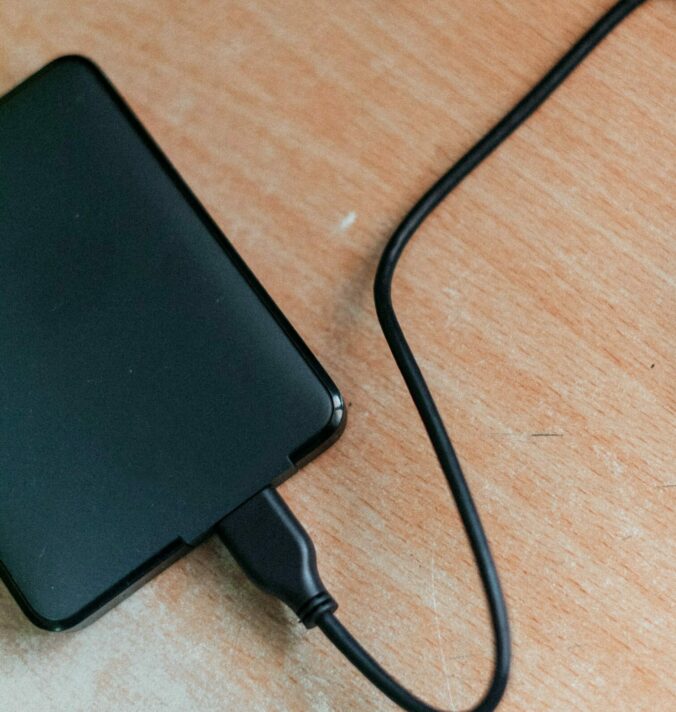
Halfway through university, my father purchased me an external hard drive, in an effort to remove data from my computer and help it “run a little smoother”.

Photo of an external harddrive

PRO: It can contain a lot,  1 TB of information to be exact. That represents 1 000 gigabytes (GB) or 100 000 000 megabytes (MG). 250 000 photos, 250 movies or 500 hours of HD, 6.5 million documents pages
.. Ya get it


CON: Compared to a cloud, this is a physical piece that you would have to have with you in order to access your files.

WEBSITE
This was the first time I was introduced to the concept of using a website to collect, hold and retrieve resources. Most websites are free and relatively easy to use and navigate. You could keep a website private, or public, depending on your preference and needs.

PRO:   
After set up, keeping a website up to date and uploading new resources as you find them should be straightforward. 
CON:
You have to be careful with the format of your uploads, and be mindful of copyrights. You should only be sharing resources you find on creative commons, you have received explicit confirmation to use.

GOOGLE DRIVE
Oh the cloud, anything you store on the drive can be retrieved anywhere with a stable internet connection, now that is powerful! Google is free and accessible in almost everywhere in the world!

phone screen showing a google icon

PRO:
No need to carry along a physical hard drive when it is all on the “cloud”, meaning you can always access your lesson ideas and resources from your computer. You can also make your documents available offline, meaning you won’t need an internet connection to access your information.
CON:
The storage offered by google drive is 15 GB (considerably less than an external hard drive)but it’s free.  Like many online storage softwares, it’s free until a certain threshold, and then you have to pay a fee, based on your needs.

I see the power! and I see the utility of strategically choosing one program, one place, one device to store your various files, whether it be for your personal or professional means!
I recommended you identify your needs, strengths, possible complications and try out a few of them! You never know what might give you an Ah-HA feeling.


ED CAMP


What an enriching experience it was to be blended with the other cohort and share topics of interest and expertise, with respect to education. I appreciated seeing friends taking on roles of leadership by sharing their knowledge and passions. In the teaching profession, there is an emphasis on collaboration and learning from one another!

Conversing with Strangers

The Art of Conversing with Strangers

I was searching for ressources on the art of conversation.
I was not in a mood to be reading. I wanted passive learning, and Alex Lyons Youtube channel was one of the first results to pop up (that means it’s good, right google?)
He claims to be a communication coach, and up to this time creating videos around that subject area (which includes leadership!).
Here is a summary of a few videos and some golden nuggets I found.

In this first video (part 1 of 4 of the art of conversation – Alas !the other parts are nowhere to be found!) Alex Lyon presents us with a little game.
The goal is simple: get the other person talking as as much as possible !
He declares we should aim for as much as 80%,
and if you’re talking, you’re losing!

The Conversation Game – How to Win

  1. Ask the other person good, simple questions.
    Ask them about their interests and activities. Ask them about their life. They will probably want to reply with all their current happenings.
  2. Ask follow up questions.
    Use your active listening skills! Don’t think about what you want to say, think about how you can inquire furhter about what they are saying with easy and straigth foward questions.
    Ex: “What are your future camping trips? What kind of gear do you use?…”
  3. Speak concisely and turn it back to them.
    When answering a question they might have asked.
    This is not about being dismissal, this is about winning the game.
    Act natural as you ask them more questions
    Ex: “…What do you recommend?”

The conversation game can completely transform the way you engage in conversations with other people.

Alex Lyon

Connecting with people and
building relationships

Here is Alex Lyons’ golden list of subjects to get another person talking comfortably by asking questions that are straightforward and relatively easy to answer. He claims that this kind of tĂȘte-Ă -tĂȘte can support relationship building.

  • FAMILY
    This can be a sensitive issue, so tread lightly and listen to your intuition. But for the most part, family is a topic that can spark joy in an individual and provide a good segway for more further exchanges.
    Ex: “Do you have family in the area? Do you have any siblings?”
  • FUN
    This is where we can inquire about the activities they like to do and ask if they have any hobbies!
    Ex: “What do you like to do for fun? What do you like to do for relaxation? What do you for thrill?”
  • FIRE
    Ask them what fires them up? What grinds their gears? What are their passions and what gets their heart pumping?
    However, I have had the conversation with friends who expressed that this question can feel heavy loaded for sometimes, we arent in tune with our passions!
  • FUTURE
    Simple, ask them about their future plans!
    Ex: “What do you have coming up this weekend? What are you planning on doing this summer?”

Conversation Starters

Two golden nuggets for a dazzling conversation:

1. KEEP IT EASY
Ask short questions for quick responses. Think true or false, and 1 worded answers. This can get the ball rolling on a conversation and segway into other areas of interest.
Ex: “How many….” “When did you…”

2. OPEN- ENDED, FOLLOW UP
This can enable a dynamic conversation where the question aims for more details and allows the other person to potentially open up. Do try to avoid “why” questions, for we can become defensive when we feel a need to justify ourselves.
Ex:”What..? How..?”

Don’t be a One Upper

Avoid the desire to compete with a fellow comrade when they are sharing a riveting tale. Be a supporting figure while listening to their story.

  1. Recognize the feeling of competition
    Sure, we want to dazzle people with our stories, but this is not yours. You dont have to say something amazing.
  2. Snap into listening mode
    Ask questions and enter into the other persons world and venture into their perspective!
  3. Take a sincere interest
    In their joy and with what they are sharing. Get excited about what they have to say.

All in all, I did appreciate the advice Alex Lyon had to bring forth in his videos on the art of conversation, even if he sounded a little preachy at times. I do not believe I will be subscribing to his channel, for on this level of the matter, I feel like I have gathered all that I wanted.
Next time I will search for suggestions pertaining to the art of conversation focussed on conducting interviews, more so for la radio! But for now, watch me come to my edge as I endeavor to converse with stangers!

microphone with on air in the background
Photo by Fringer Cat on Unsplash

New Tactic

New Tactic for Free Inquiry

 “weekly task analysis and curating and reporting of progress”
While I do take my passions seriously and I appreciate the time and initiative given to dive into a subject area of choice, I did not set myself up for success

too many loose parts and not enough dedication.

Therefore,
I have decided to narrow in on a component that frightens me = conversing with people. Especially small talk, this brings me to my edge ! It will also enable me to practice on one of my initial desires for this free inquiry, practicing and finding tricks for conducting interviews. Ye!

Conversation. What is it? A Mystery! It’s the art of never seeming bored, of touching everything with interest, of pleasing with trifles, of being fascinating with nothing at all. How do we define this lively darting about with words, of hitting them back and forth, this sort of brief smile of ideas which should be conversation? 

Guy de maupassant


THE PLAN


The internet is full of practical and useless information. A simple google search “how to practice the art of conversation” results 379,000,000 hits
 Ergo, the first step will be to sort out the various videos and links that seem appropriate and check one out a week.

Photo by Brett Jordan on Unsplash

Creating Graphics

THE POWER OF VISIAUL CUES!

I was blown away by the power and user-friendlyness of creating images in PowerPoint.
MIND BLOWN AND SHIFTED
I feel like I have just unlocked a gate to efficiency and merrymaking! Out are the days of struggling and fighting with Word or other applications like Preview. (for mac users, you know if you know!)
I had no idea.
In an effort to keep these important instructions from leaving my mental space, I will create a list of those attributes I found most interesting:

  • Hold the shift button for image sizing (keep the image squared!)
  • Display for page size (poster, letter, square)
  • Bringing segments forward, backward, to the back/front

This cohort amazes me. With no fear, they tackled the unknown and showed a willingness to unleash their creativity. They simply crack me up with their wit. I loved discovering what my peers were able to make in 12 minutes, seeing their personalities shine and they expressed themselves in graphics.
Soon we will get to the real serious business.

WORD MAP

Meditating on Jessy Millers Presentation

What Have I done….


Immediately following this presentation, I was left in a state of shock.
It took me all weekend to digest the bucket of information Jessy dumped on us.
I was questioning all my past actions and thinking about instances where I have probably crossed a line, potentially a legal line. I feel like I am fairly knowledgeable and competent when it comes to computers and technology, but I was also faced with the fact that, in the end, I know nothing about security and privacy.

A picture of the snapchat icon
Photo by Alexander Shatov on Unsplash
For all the pictures and videos I have sent over Snapchat, I am so disheartened and sorry that they will live FOREVER on a server in a faraway and unknown land...

This sparks the consideration that as future educators, we must be mindful as we balance our social, personal and professional spheres for we will be responsible for the vulnerable sector. This puts us in a position where we have a
DUTY OF CARE
and therefore it is of most importance that we reinforce our awareness as we navigate these networked spaces. 


The phone is on the kid, the kid is in the class, the class is in the school, the school is in the district….

It was disheartening to learn that students in middle school have a harder time dealing with the stressors of social media. Their poor brains are still developing and they simply can’t handle the pressure! It’s also not their fault that most adults around them are consumed and coerced into the social spheres and the potential of technology. Most adults did not get the opportunity to have good models to set the example. The promotion for a balance between life and technology is still being learnt for this new age of technology is still fairly recent.

While we won’t get the same level of usage and intensity of phones and computers say between, say a grade two student and a grade 12 graduate, here is a quick list of potent thoughts for reflection from Jessy: 

  • Personal use entitlement
  • Balancing professional expectations
  • Create open dialogue of usage with students and coworkers
  • Understand Social Media culture
  • Reflect on your use with co-workers
  • Learn how to be an ethical User
  • Value of information!
    (When it’s free, it’s because you are the product and they are selling our data!)

VIDEO GAME PLAY IS POSITIVELY CORRELATED WITH WELL-BEING


This is an article written by Andrew Prizybylski, a researcher that Jessy mentioned during his talk.

“My work is mainly concerned with applying psychological models of motivation and health to study how people interact with virtual environments including video games and social media.” 

I feel like I can trust this gentleman, and I plead for him to save us!

While I can appreciate his statement, on the surface I do not see any problems with playing video games. Nevertheless, I have encountered too many scenarios where young people are staying up for hours on end, unable to detach themselves from the game to catch some shut-eye. 

Suuure, I have had my share of late nights playing Mario Party until 4 in the morning, eating ramen at a sleepover
 I am not thinking of these one-off, festive nights that happen once in a blue moon, for these can be quite rewarding!

When individuals are playing for more than 8 hours a day, unless it is some sort of employment, I deplore the lack of moderation. While that sounds a little harsh, I appreciate not everyone has had positive role models for appropriate and healthy actions towards this hypnotizing pastime. I believe talking about it and creating self-awareness is a great first step, and this topic has its place in the classroom.

It’s time to party!

Photo by Egor Ivlev on Unsplash

Hot Pocket,

I Googled Myself

So, we have been discussing the importance of privacy, for ourselves and those around us. We have also been considering our digital footprints as we will be working in a position of care. Working with the vulnerable public puts us in a certain position of power where professionalism is required. I am almost surprised there is no mention of the digital world with the BCTF code of ethics… Unless I am not looking in the right place.

 I remember, as students in high school, we would google our names and feel a sense of dejection as nothing came up. Let’s face it, it was different times back then and it’s not like high schoolers have multiple opportunities to be published on the world wide web! It was with excitement and hesitancy that I entered my name in quotations and hit enter this week.
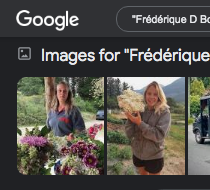
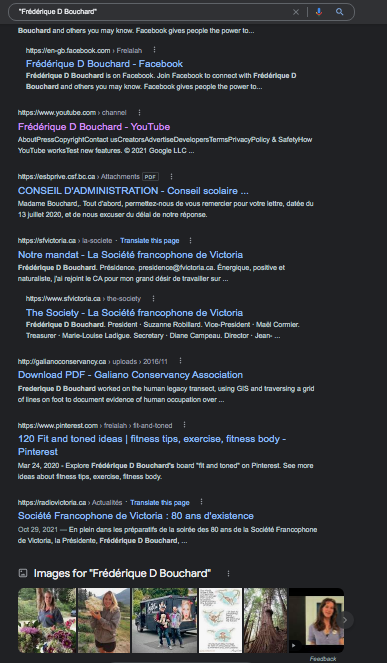
There were a few elements and hits that I was expecting and mentally ready for. As an avid volunteer within the francophone community of Victoria, I was not surprised to see a few publications and even a photo. Thank you google for painting a pretty portrait of me. 

AND OH ! the horror when I saw “120 Fit and tones Ideas – Pinterest”
WTC! How dare Pinterest chose THAT ONE BOARD, to show up for the entire whoever decides to google this name. I will admit, I am fairly embarrassed and also slightly petrified that Pinterest can and would do that?
I have since then changed my name on my Pinterest profile.
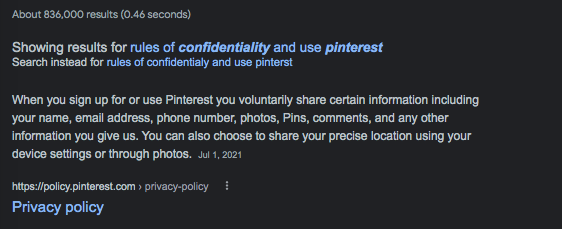
Next step: read the fine print.
Here is an article that could help elucidate the quack-jack behind this exposure from Pinterest. 
And let me just comment on the images this search puts forwards. Most of these pictures are pulled from Facebook where I have “liked” and commented on a photo. I suppose these come from a public profile, based on these public photos?
One is a picture I have “pinned” to a Pinterest board …
Oh the Murph, where does all this come from?


Zombies and Wizards

Zombies and Wizards

I was really nervous at the thought of creating a screencast! I think my primary fear is listening to a recording of my voice 
 Oh how we can sound different on the phone, it’s like our voice gets altered as it goes through electronic wavelengths!

Personal fears aside, I see so many benefits and opportunities with creating and presenting screencasts for classroom instruction. Most students are supported by visual clues, more than simply audio instructions. Okay sure, the debate on the 3 different learning styles  (visual, audio and kinetic) has kind of been debunked, but I am a firm believer in this powerful quote

“A picture is worth a thousand words”

Frederick R. Barnard

Students are increasingly being introduced to computers and tablets in the classroom. I am a graduate from the francophone school district, where every primary student gets access to a tablet and the high schoolers get a laptop
. Since substituting, I have seen a whole lot.

I’ve encountered students in grade four who are unable to use the keyboard to type up a story, students who are unaware of how to use the search bar, and most unfortunate, students that are so attached to the screen they have a hard time putting them away at the end of the lesson…

They remind me of zoooommbiies.

My most recent experience was in a grade 8 class, where students did not know how to access an attachment that came with an email… There is an assumption that students are part of a computer wizard generation for they have been surrounded by technology their whole lives, but I would argue that there are far more clueless than we think
 Sorry, clueless sounds rude. I don’t think it’s entirely their fault.

Scratch, GIMP, Comic book creators, Freshgrade, Magicavoxel
 there are countless applications students can use in the classroom in an effort to demonstrate their learning. While these are fun and dandy, it is our role as teachers to implicitly direct students around these tools and applications. Screencasting is a powerful and efficient way to share the necessary steps for meaningful engagement in learning. 

https://earth.nullschool.net/

An epic visualization of global weather conditions

I love the weather and I love cartography. I was introduced to this interactive website during my geography degree, and I often visit it when a storm is brewing. In a classroom setting, this website could be used to explore weather patterns and meteorological phenomena around the world. It is a great educational resource with many applications!
On Facebook, they have many time-lapse videos of their explorations! (Fires, storms, updates!


Shower Thought?

Oh sweet, bitter-sweet technology. It has certainly come a long way, constantly evolving at an increasing speed ever since I was a child. This has inevitably changed how our society functions and how we interact with one another
 for better or for worse, I will let you decide that for yourself.

Technology was created to make our lives easier, to make processes more efficient and connect the globe. When it works and the connections are solid, it can perform wonders that enable all walks of people to further their activities, business, inquiries… This flow of bandwidth, mega bites, and serotonin can be crucial in some cases. For business or for pleasure, whenever technology fails to function and operate as we desired, I am reminded that we are simply animals running around on a spinning rock.

Why is it that the students are so calm when you put them in front of a screen? Why are students are often more engaged in the material when it’s coming from a video. Why do they appear to listen more attentively?

Technology is here to stay. How can we educate the future citizens of this planet to regard their personal devices (that often get thrown in their faces) as a tool for their future development, to encourage curiosity and wonder?

Passion Project

As part of the EDCI 336 – Technology and Innovation in Education, I will be creating a personal blog that will follow the evolution of an inquiry. This is a wonderful occasion to set meaningful time to better my skills as a board member for the Victoria Francophone Society.
The Victoria Francophone Society aims to support the francophone community by promoting the interests of our members and hosting events open to all who identify with the language and culture.

There are several skills I desire to improve that I think are essential when serving the community in an active leadership role.

I would like to understand Excel to a higher standard in an effort to make the spreadsheets more visually appealing and efficient for sharing or storing information.
I would like to improve my writing, especially when it comes to french grammar! Whether it is for writing reports or online communications with the community, there are a couple of grammar rules that really stump me. 
I would also like to use this opportunity to explore the art of conversation. I would like to learn strategies and gain confidence in conducting interviews.

Three facets, three goals. All for one cause!

Newer posts »